What is CRP and How Can I Benefit?
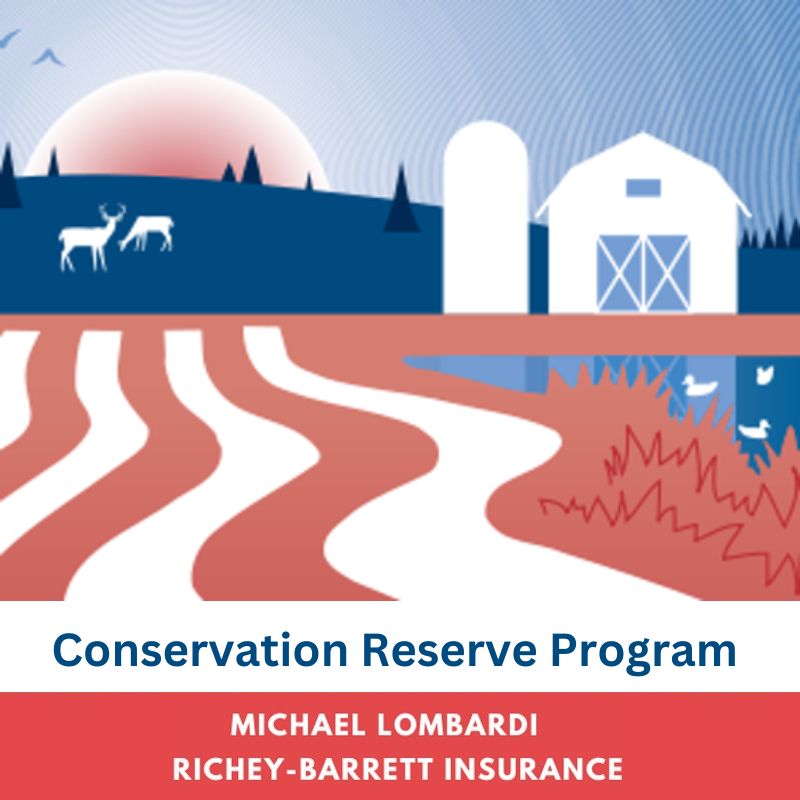
As a farmer, you own a great deal of land. Did you know that oftentimes, some of that land can be more valuable to you taken out of production? Today we’ll discuss the Conservation Reserve Program (CRP) and how you could benefit from enrolling your environmentally sensitive land in CRP.
One of the largest private land conservation programs in the United States, CRP was signed into law in 1985 by Ronald Reagan via the Food Security Act of 1985, and reauthorized in the Farm Bill of 2018. Administered by the Farm Services Agency (FSA), the long-term goal of CRP is revitalizing land cover (such as approved grasses and trees) to improve water quality, soil erosion risks, and preserve wildlife habitats. Farmers who enter a contract for CRP agree to remove sensitive land from agricultural production for a specified time period in exchange for rental payments and cost-share assistance.
The contracts for CRP can vary in length and enrollment can range from 10-15 years. This allows adequate time to assist in reaching the long-term goals for which CRP was created. That said, in Ohio, during the months of March 15 and July 15, CRP land can be used for non-emergency grazing and haying for your livestock, as it is outside the nesting period.
You may be wondering if you qualify for CRP and what the requirements are. Producers have the ability to offer land during the general enrollment period. Offers will then be graded and extended based on the Environmental Benefits Index (EBI). Metrics used in determination include (among others) wildlife habitat benefits, water quality benefits, on-farm benefits, and air quality benefits from placing land in CRP.
Producers wishing to enroll land in CRP must have owned and operated the land for the previous 12 months, or meet one the following requirements:
- The new owner acquired the land due to the previous owner’s death;
- The ownership change occurred due to foreclosure where the owner exercised a timely right of redemption in accordance with state law or;
- The circumstances of the acquisition present adequate assurance to FSA that the new owner did not acquire the land for the purpose of placing it in CRP
Your CRP land may not be in production, but that doesn’t mean you can skirt your self-obligation to manage the risk in your operation. In this case of CRP land, you can protect yourself by maintaining liability coverage at this location, shielding you from an unfortunate occurrence. For example, although seemingly counterintuitive to some, hunting is allowed on CRP land in accordance with federal and state hunting laws. Without preparing yourself for a negative circumstance, how would you deal with a hunting accident that may take place? That’s just one possibility, but there are many others and I’d be happy to discuss them with you another time!
As you can see, if you have land that could become more beneficial taken out of production, applying for CRP can provide you income while helping protect the environment simultaneously. CRP currently protects more than 20 million acres across the United States—should yours be added?
Whether you decide CRP enrollment is right for you or not, make sure you’re properly protecting against all future threats to your well-being. All it takes is talking with your Trusted Choice Farm Insurance Specialist at Richey-Barrett Insurance to navigate and mitigate your potential risk exposures.
For additional information on CRP, be sure to check out the link below:
Conservation Reserve Program (usda.gov)


