
Trench Boxes are for your Safety
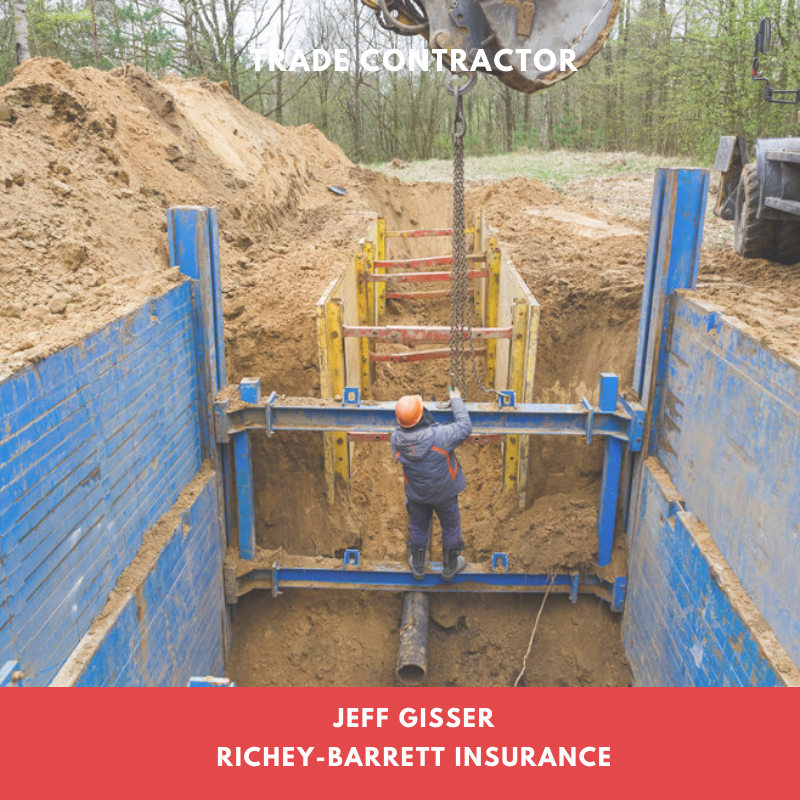 Many artisan contractors may find themselves needing to dig a trench. It could be a plumber replacing a sewer line, a carpenter digging a foundation or a waterproofing contractor working on an existing structure.
Spring is upon us in Northeast Ohio, and even with all of the issues with COVID-19, artisan contractors are getting back to outside work. As work picks up, the need to dig trenches may become necessary, and following proper OSHA guidelines for the use of trench boxes or trench shields is key. Of course, before you start digging, you have already called 811 as discussed in one of our previous blogs so you don’t sever any underground lines.
OSHA guidelines state that whenever a trench reaches a depth of 5 feet, a protective system must be employed. Protective systems are also required when working in trenches less than 5 feet if the soil may have a propensity to cave in when the trench is being dug.
Trench boxes or trench shields are one type of protective system. They are not meant to shore up the walls of the trench to stop it from collapsing but are meant to protect workers from the pressure and weight of the soil in case the trench caves in. Trench boxes are designed to withstand tremendous amounts of pressure, and are typically made of steel or aluminum of varying thicknesses. The walls are held apart by spreaders or other trench box panels to create an area of the desired width.
The soil pressure and depth rating of a trench box are determined by their design. If working in a trench you must have access to a ladder or other means of egress. The ladder must be secured and within 25 feet of all workers and extend 3 feet above the top of the trench. To learn more about regulations covering trench boxes, see OSHA 29 CFR Part 1926.650-652 Subpart P-Excavations.
Before you starting digging or if you wish to renew your policy, call your Trusted Choice Insurance Agent at Richey-Barrett Insurance.


