The Pool is on Fire
Learn five factors impacting the entire U.S. homeowners’ insurance market.
Read why natural disasters anywhere in the U.S. affect individual homeowner insureds.
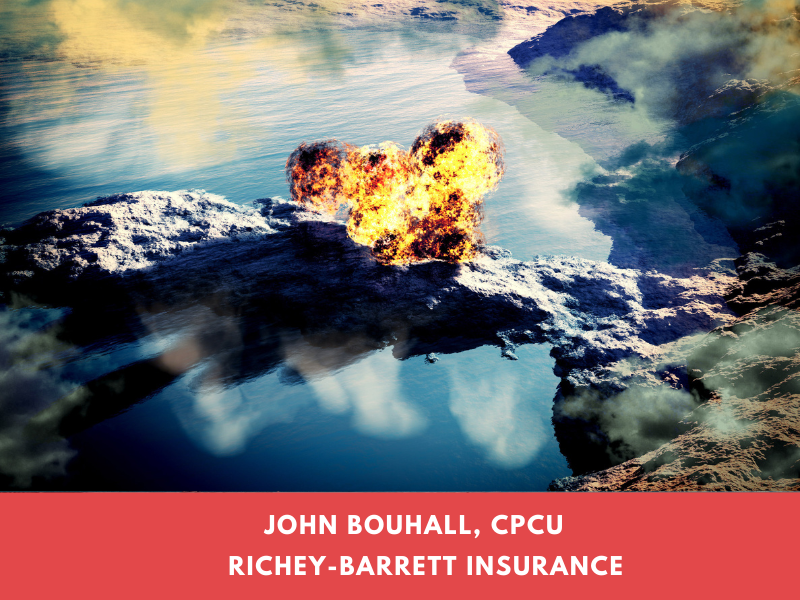
The pool is the multibillion-dollar U.S. homeowners’ insurance market. Its size belies the reality of what is necessary to keep the pool responsibly afloat. More and more, multiple regions of the U.S. home insurance market are too hot to touch. The pool is out of control, and here’s why:
- The risk transfer is out of balance, i.e. paid losses exceed premiums paid.Homeowners’ insurance is a transfer of financial risk from the homeowner to the insurance company. A premium is paid in exchange for an insurance policy. This risk transfer works, if the premiums paid by the entire pool of insured homeowners are sufficient to absorb a range of predictable losses experienced by a much smaller number of participants in the pool. While insurance companies factor in some degree of catastrophic property losses to their premium rates, long-term sustainability is impaired by item 2.
- Predictability of loss is materially compromised.The severity and frequency of property losses due to natural weather events are no longer reasonably predictable. Severity refers to how extensive and expensive the losses are. In recent years, severe weather events, such as hurricanes, tornadoes, wind/hail storms, and wildfires have been far greater than predicted, or even imagined. Both the duration and the territorial extent of these events are broadening with no predictable accuracy. Notably, coastal weather events have surged inland, damaging homes miles away from the coasts. More extensive usually means more expensive.Frequency has become more like a roll of the dice, i.e. once in 100 years is no longer a reliable standard. Multiple catastrophic weather events have occurred within the last 15 years, some every few years. Rate setting is risky without a dependable model of what, when, where, and how much to expect. Private insurers are required to adhere to filed rates approved by state insurance regulators. Huge, ongoing, unpredictable actual losses are no match for traditional rating structures.
- Inflated property values in desirable, but high-risk susceptible, regions of the U.S.High real estate valuations in coastal regions tend to be accompanied by high-cost labor and materials markets. Property losses that insurance companies are obligated to cover in these areas are outpacing the pool of premiums paid by all U.S. homeowner insureds.
- Disproportionate concentrations of the U.S. population reside in or near regions predisposed to catastrophic weather events.Neither the infrastructure or the majority of individual homes in these areas is adequately designed to resist severe weather damage. Yet, homeowners continue to live, build, or rebuild:
- in hurricane zones
- at low sea level
- in dry, desert, water-scarce spacesRepeating, outsize, covered property losses in these locations are borne by every insured in the U.S. homeowners’ insurance pool.
- The pool is overcrowded with mounting and unsustainable property losses.Not all private homeowners’ insurance companies are heavily exposed to the items highlighted herein, but the ongoing fallout from those that are will be consequential enough to impact every homeowner insured in the U.S. Just as no man is an island, no insurance company is a fortress immune to market activity surrounding it.
Richey-Barrett Insurance is your Trusted Choice Independent Insurance Agency for personal lines insurance. We are a valuable resource for addressing your concerns about homeowners’ insurance, as well as representing quality homeowners’ insurance companies.


