Personal Risk vs. Return: A New Dimension to E-Scooter Use
Learn why e-scooter users need special insurance beyond homeowner’s and personal auto insurance.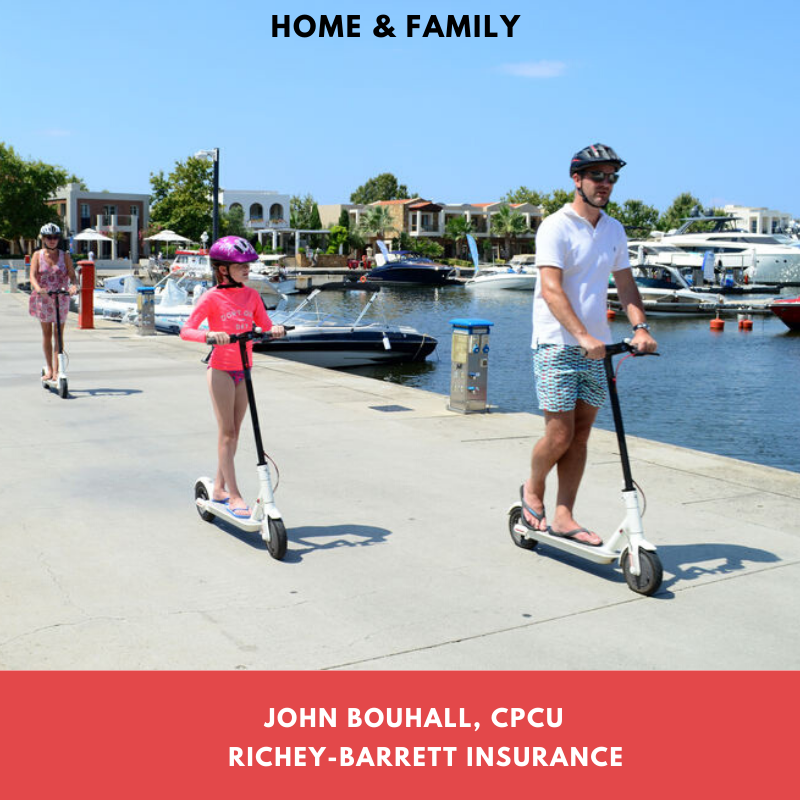
Read why there is personal liability risk in the return of e-scooters.
It’s “take 3” for e-scooters in Cleveland. As COVID-19 lock-downs are gradually rolled back, Cleveland City Council passed legislation in early June of 2020 to return shared mobility devices to Cleveland. Safety should always be top priority for anyone operating an e-scooter. You must obey traffic laws, ride in the street (or bike lanes where possible) with the flow of traffic, and remain fully alert. Nonetheless, if you take to the streets aboard an e-scooter, you take on more personal responsibility.
More personal responsibility means more personal liability. While riding an e-scooter may be fun, adventurous, or convenient, it literally involves moving liability parts. Consider the risk of potential damage you cause to the e-scooter device, as well as injury/damage to the person(s) and property(ies) of third parties. These are a very big deal, since there is a huge gap between your legal liability incurred in the use and operation of an e-scooter vs. what is covered by your personal insurance policy(ies). Below is a simplified chart I included in last year’s blog entitled, “If You E-Scoot, Be Astute.” It still applies in June 2020.
| Accidental Damage/Injury You Cause To: | Are You Legally Liable? | Is Coverage Available in Homeowners or Renters Insurance Policy? | Is Coverage Available in Personal Auto Policy | Is Coverage Available in Personal Umbrella Liability Policy? |
| The e-scooter | Yes | No | No | Possibly; consult each policy and insurance company. |
| Someone else’s car or property belonging to a third party | Yes | No | No | Possibly; consult each policy and insurance company. |
| A pedestrian or third party | Yes | No | No | Possibly; consult each policy and insurance company. |
The recent legislation passed by Cleveland City Council expands the hours of operation to 5 AM to 9 PM through Labor Day, and increases the maximum speed from 12 mph to 15 mph. Longer hours of operation and faster speeds may attract e-scooter riders, but they also add risk. Dusk and dark hours present visibility concerns for the rider as well as other drivers, and faster speeds often correlate with increased damage/injury. Cleveland City Council addressed the new safety issues surrounding COVID-19 by requiring e-scooter companies to sanitize the devices every time an employee has contact with them, inclusive of recharging, rebalancing, and servicing. Riders are encouraged to wash/sanitize their hands before and after using, as well as wipe down handlebars.
Another risk vs. return aspect of e-scooter use pertains to the contract riders must sign before accessing the e-scooter. For the obvious reasons highlighted in the chart above, standard hold harmless clauses are a liability problem for e-scooter users. Contact your independent insurance agent well ahead of operating an e-scooter to discuss insurance coverage options available to address e-scooter liability. Something else that may be lurking in the fine print of an e-scooter company’s contract is a hold harmless clause which attempts to shift liability to the rider for COVID-19 related illness or death. Be on the safe side and consult with an attorney before signing anything.
Richey-Barrett Insurance is your Trusted Choice Independent Insurance Agent striving to keep customers informed of insurance issues relevant to your daily lives. Contact us for homeowner’s and renter’s insurance, personal auto insurance, and personal umbrella liability insurance. If you are going to use an e-scooter, contact us well before to discuss special insurance coverage.


