
The Po-tā-to, Po-tä-to of Electric Bicycles
Discover why a special insurance policy is recommended for electric bicycle users.
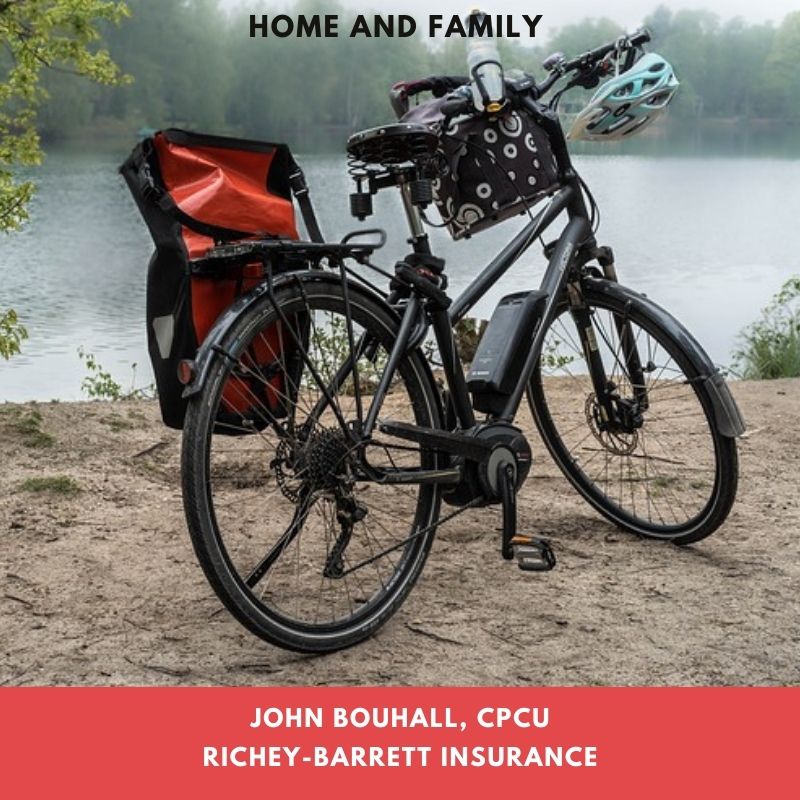
Read about coverage gaps in personal lines insurance before riding an e-bike.
You’ve heard the expression, “You say po-tā-to, I say po-tä-to.”. Consider the different meanings it conveys. The simplest understanding is that a potato is a potato. Same word, different pronunciation, same thing. Similarly, an electric bicycle is an e-bike. Slightly different term, same thing. Po-tā-to, po-tä-to might mean two people view the same thing in a different way. What about situations in which terminology is tossed around, and people unwittingly associate the same thing with different terms that mean different things? For example, is an electric bicycle a motorized bicycle? Is an electric bicycle a motor vehicle? For purposes of this blog, it boils down to actual definitions.
Ohio is one of 10 states which has enacted e-bike legislation. Ohio’s legislation defines the term “electric bicycle” by class 1, class 2, or class 3, and each class is further defined. Additionally, Ohio law distinguishes “motor vehicle” from both “motorized bicycle” and “electric bicycle,” and further states that “motorized bicycle” or “moped” does not include an electric bicycle. (Go to legislature.ohio.gov. See House Bill 250; Amended Substitute House Bill Number 250, pages 1, 2, 10, and 16.) While basic personal insurance policy language is precise, it does not include the term “electric bicycle.” This is where po-tā-to, po-tä-to gets people into trouble. Real trouble.
First and foremost, before you consider using an e-bike, i.e. electric bicycle, read and understand the regulations governing whatever electric bicycle class (1, 2, or 3) applies. Realize, local governments have authority to restrict e-bike usage beyond Ohio law, so determine what is and isn’t allowed where you plan to ride an e-bike. Next, contact your Trusted Choice Independent Insurance Agent at Richey-Barrett Insurance to ensure you have adequate personal insurance protection. With respect to the coverage issue of electric bicycles, a review of standard personal insurance policies is in order.
The following policy reviews are generalized. Actual policy terms, conditions, and limits apply.*
Standard Homeowner’s Insurance Policy (HO-3)*:
SECTION I – PROPERTY COVERAGE of the HO-3 does not cover motor vehicles, with two exceptions. Electric bicycles do not meet the requirements to qualify for either exception. Therefore, there is no property coverage for electric bicycles under the HO-3, nor is there theft coverage for an electric bicycle under the HO-3.
SECTION II – LIABILITY COVERAGE. The prudent advice to homeowners is that there is no liability coverage in the HO-3 for the operation of electric bicycles. Here’s why. The HO-3 provides very limited motor vehicle liability coverage, if the motor vehicle meets described conditions. While the policy language does not address “electric bicycles” per se, my advice to homeowners is that no homeowner’s insurance policy (including the HO-3) was issued with the intent to provide liability coverage arising out of the operation of electric bicycles, unless a special endorsement was added for an additional premium. As of March 2021, I am not aware that any homeowner’s insurance companies are offering an option to purchase liability coverage specific to the operation of electric bicycles.
Personal Auto Insurance Policy (PAP)*:
The PAP does not define “Motor vehicle,” but it does define “Newly acquired auto,” “Your covered auto,” and “Non-owned auto.” An electric bicycle does not meet the definition of any of these three, therefore, there is no property or liability coverage for an electric bicycle under the PAP.
Personal Umbrella Liability Policy*:
First, understand an umbrella policy applies to liability coverage only. That said, liability coverage for an electric bicycle under a personal umbrella liability policy is only applicable if:
a) the electric bicycle is owned by the insured or family member and to the extent underlying insurance provides coverage; or
b) you or a family member do not own what is defined as a “recreational motor vehicle.”
Item a) above would not become applicable until all underlying insurance limits were exhausted.
Assuming an electric bicycle qualifies as a “recreational motor vehicle,” item b) above would drop down and provide liability protection (subject to umbrella policy terms, limits, and conditions) with respect to a rented or borrowed electric bicycle only. A self-insured retention (deductible) would apply.
Conclusion*: A special policy form specific to personal electric bicycle use is the affordable solution for both property and liability insurance protection. Annual premiums run in the $200. to $250. range for a $300,000. liability limit. Property coverage includes theft, comprehensive and collision, and roadside assistance.
An Extra Note of Caution*: Pay attention to the policy territory clause, if you plan to use an electric bicycle outside of the USA. Some policies limit coverage to the USA. Policies providing worldwide coverage frequently require any suit be filed in the USA.
Richey-Barrett Insurance is your Trusted Choice Independent Insurance Agent for personal lines insurance including specialty items.


