
It All Started with a Drip.
Read about one church’s deferred maintenance issues and imagine your church in like shoes.
Learn why churches should plan for and schedule property maintenance, repair, and replacement.
Wear and tear never rest, not even on Sunday. Like all properties, church properties require ongoing maintenance, including buildings or areas that may have minimal use or reduced use due to the pandemic. While all things old become new again, there is an actual window of opportunity for wear and tear to go into overdrive and interrupt the useful lifespan of property. That window of opportunity is delayed maintenance, delayed repair, and/or delayed replacement of property to the point it becomes obsolete or unfixable.
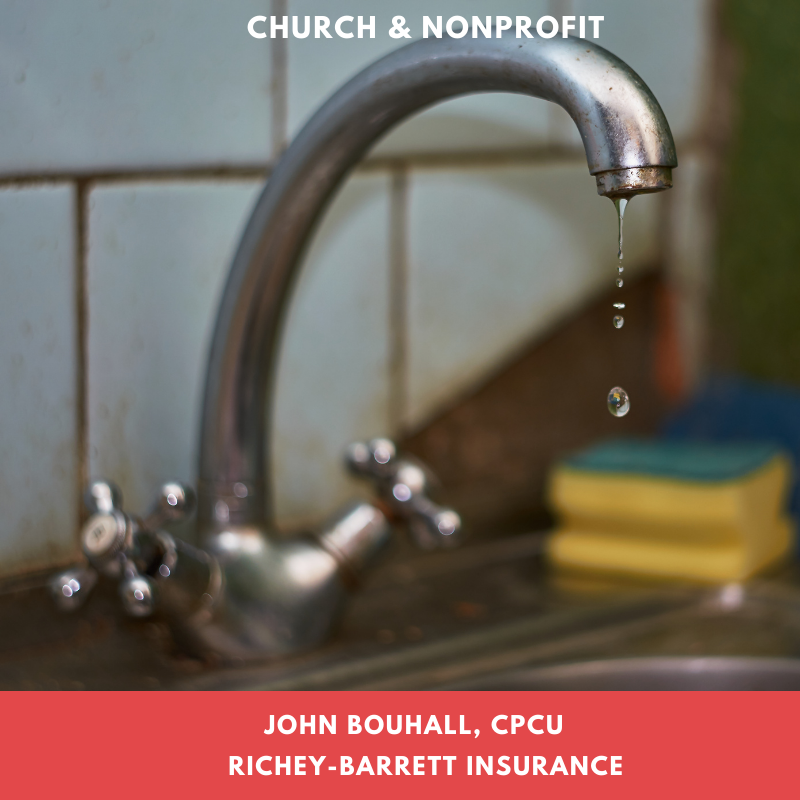
Think about the nagging “drip, drip, drip” sound coming from a sink faucet. Annoying, but usually a quick and affordable fix for an experienced handyperson. Yet, for one of our church insureds, what started out as a church member reporting the drip, drip, drip of a restroom sink faucet that would not shut off, grew to a series of deferred maintenance issues. This restroom is located in a separate building (built in the late 1950s) from the main church, which was not being used much, because of the pandemic. The following abbreviated account illustrates wear and tear, as well as the costly overlay effect of deterioration that progressed to unfixable. This church had a good ending. How would your church fare in a similar predicament?
Summarized Series of Deferred Maintenance Issues in a Real–Life, Church Property:
#1 Volunteers checked other faucets in the separate building and determined eight more faucets were resistant to being turned to on and off positions. The faucets were original with the structure, 60+ years old! Wear and tear exceeded repair; all faucets needed to be replaced.
#2 Volunteers discovered that water supply tubing for faucets in the 1950s was a different size than that used today. After contacting several suppliers, they were able to locate the correct, old-fashioned size.
#3 Volunteers discovered that the drainage pipes from all those sinks into the building walls looked battered and worn. They decided these should also be replaced.
#4 Volunteers discovered the metal drainage pipes had worn so thin that some of them no longer connected to the down drain pipes inside the walls. Rather than properly flowing through and out of the down drain pipes, water flowed down the inside of the cement block walls.
#5 Volunteers discovered there was no functioning water trap to prevent smells (which were occasional) from wafting back up into the restrooms.
Fortunately, volunteers were able and willing to fix and pay for the series of deferred maintenance issues outlined above. The primary lesson is that nothing physical lasts forever. Churches that plan for and schedule repairs and reasonable replacements are less likely to face unmanageable, unaffordable, and possibly unsustainable property and/or liability expenses.
From an insurance standpoint, there is no insurance policy that covers wear and tear. Depending on the circumstances, deferred maintenance may result in coverage denial by an insurance company. The best advice is basic advice, i.e. property owners, including churches, are responsible for the maintenance, repair, and upkeep of their properties. These responsibilities cannot be transferred to an insurance company.
Richey-Barrett Insurance is your Trusted Choice Independent Insurance Agent for church insurance. We understand many churches are challenged by diminishing resources, and we strive to offer quality insurance coverage that protects church assets and works with your church’s budget.


