Call of the Drones
Learn why insurance companies employ drones to assess and inspect property.
Read why two investment property insureds recently received notices of non-renewal.
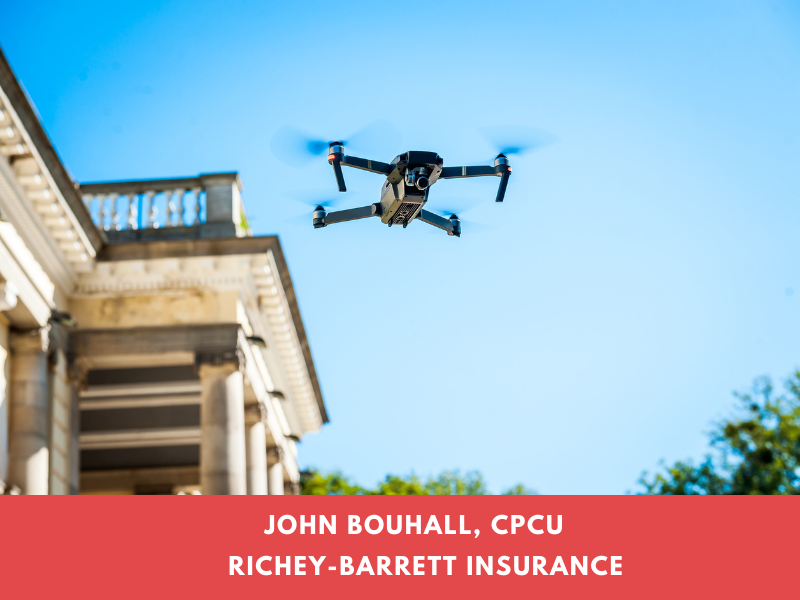
Drone usage in the insurance industry is not new, but it is getting up close to more and more insureds, including those located in Ohio. While widespread loss assessment was an early application of drones in the insurance industry, increasingly they are being deployed for individual property inspections. Recently, two of our agency’s investment property insureds received non-renewal notices; the notices resulted from drone/satellite images.
Why are insurance companies engaging drones to do what was traditionally done by a human insurance claim adjuster or property inspector? One letter at a time, the superior capabilities of drones are:
Detail not seen by the naked eye.
Remote access to site to inspect and/or assess damage.
Objective documentation of property condition before and/or after loss.
Navigable to obtain precise vantage points.
Efficient collection of property and loss images.
Safe means of assessing damage or inspecting precarious sites.
With respect to our two investment property insureds receiving non-renewal notices, the drone captured high-resolution images of aged roofs in need of replacement. There was evidence of significant wear and tear, a contributing factor to property loss, which is never covered by insurance. Property insurance companies are paying much closer attention to the condition of commercial roofs in general. Underwriters view properties with neglected roofs as “waiting for a happen”. For example, a well-maintained structure with a newer roof, or with a good roof containing well-performed roof repairs, may withstand a windstorm that rips off large portions of a neglected roof. Property insurers assess risk before quoting and issuing policies. There is no appetite for property risks with a high probability of total roof loss due to a windstorm, when the roof has been neglected in terms of proper maintenance and upkeep for months or years prior to the windstorm.
Remote access assists insurance companies in claims management and underwriting consideration. It is both convenient and a cost savings.
Drone images are inherently objective, and drones are navigable and efficient. Within a few hours of receiving notice of a claim or incident, a drone may be deployed to assess the initial condition of a property. Capable of navigating through and around damage that would be hazardous for a human to enter, a drone efficiently gathers data and images of loss. The benefit to insureds is two-fold. First, drones allow rapid response, which improves claim processing. This is particularly important for investment property owners and managers who want to return the property to habitable condition as soon as possible. Second, drones provide documentation that is irrefutable, thus reducing the risk of insurance fraud, a continual factor which affects insurance premiums for all insureds.
If you own or manage investment property, contact Richey-Barrett Insurance, a Trusted Choice Independent Insurance Agency, to discuss your insurance.


