
The Peril Of Water Damage
Learn what investment property owners should know about water damage coverage.
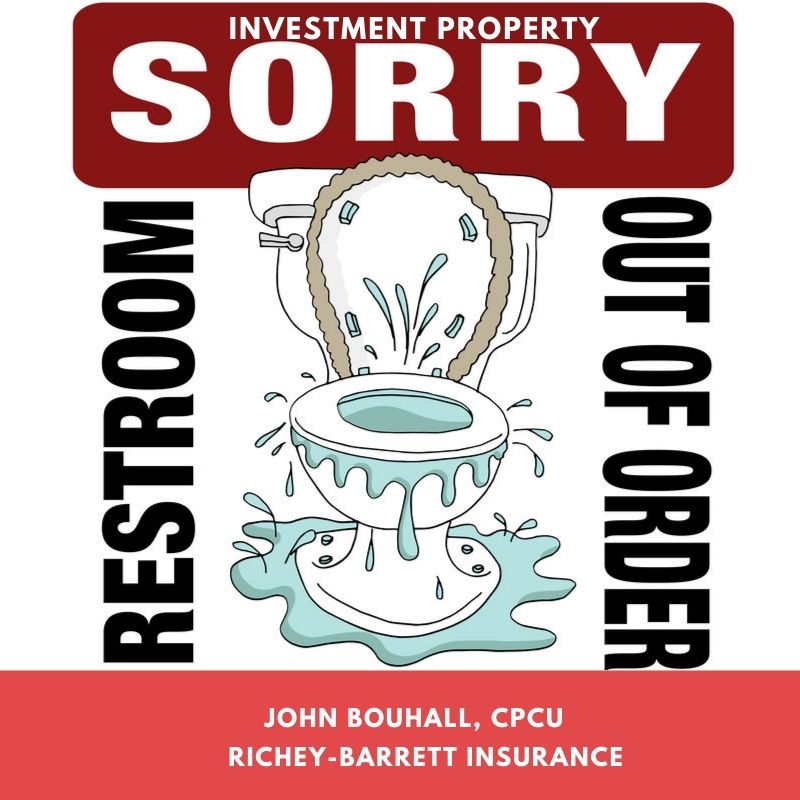
Read perspective about investment property insurance and water damage losses.
It is absolutely true that water damage losses can be extensive and expensive. It is also true that property insurance is not designed and does not cover all risks of loss to property. Today’s blog is a building block intended to help investment property owners get perspective about what is and is not covered by property insurance with respect to water damage. Bear in mind that actual policy terms and conditions always apply to each specific loss.
All property is subject to perils. When referring to property insurance, a peril is a cause of loss. Water damage is a peril that is not covered in the basic, named peril, property coverage form. Broader property forms exist, some of which provide coverage for water damage. With very few exceptions, our agency, Richey-Barrett Insurance, only offers investment property insurance on coverage forms that include the peril of water damage. That said, insureds should understand that no insurance policy covers every conceivable loss due to water damage.
Water damage coverage is always limited to particular types of damage by water. More specifically, water damage coverage applies only to damage resulting from accidental discharge or overflow of water or steam from within a plumbing, heating, or air conditioning system or domestic appliance. The resulting damage must directly ensue from breaking or cracking of pipes, fittings, parts or fixtures which form a part of the system or appliance. Not an easy read, but a key point I want readers to grasp here is that property insurance is not a mechanism to address defects, neglect, or wear and tear.
Let’s consider a few practical examples of water damage losses that investment property owners may experience and whether or not the investment property owner’s insurance would provide coverage. (Again, note actual terms and conditions of each individual policy always apply.)
EX #1:
A tenant flushes the toilet, then leaves the property to go to work, unaware that water keeps filling up in the toilet and overflows. The accident is discovered hours later when the tenant returns from work. The resulting damage to flooring, cabinets, as well as ceiling and walls directly below would be covered by the investment property owner’s insurance. Any damage to the property of any tenant is not covered by the investment property owner’s insurance policy. (Tenants should always purchase a renter’s insurance policy covering the contents of the tenant.)
EX #2:
Three days of heavy rainfall cause sewer backup in your investment property. This is a straightforward example of no coverage. A helpful saying in the property insurance industry with respect to water is,”if it seeps, creeps, or backs up, there is no coverage.”
However, some insurance companies have recently started to offer the option for investment property insureds to purchase a very low dollar limit of water backup coverage only. Water backup refers to water coming up through a sewer or storm drain in your investment property. Again, no coverage would apply to contents of any tenants.
EX #3:
Water intrusion through the foundation of your investment property has resulted in bowed foundation walls. No coverage. Water damage resulting from seepage and creepage is not insurable.
EX# 4:
An automatic sprinkler system accidentally leaks and causes damage to ceiling, walls, and flooring. No coverage, unless the investment property owner’s policy includes a sprinkler leakage endorsement.
EX #5:
A flash flood inundates the basement of your investment property. No coverage for flood. Flood coverage is only available through a separate flood insurance policy.
Understand what insurance protection your investment property insurance provides, as well as what coverage is available. Call Richey-Barrett Insurance, your Trusted Choice Independent Insurance Agent, today to discuss your account.


